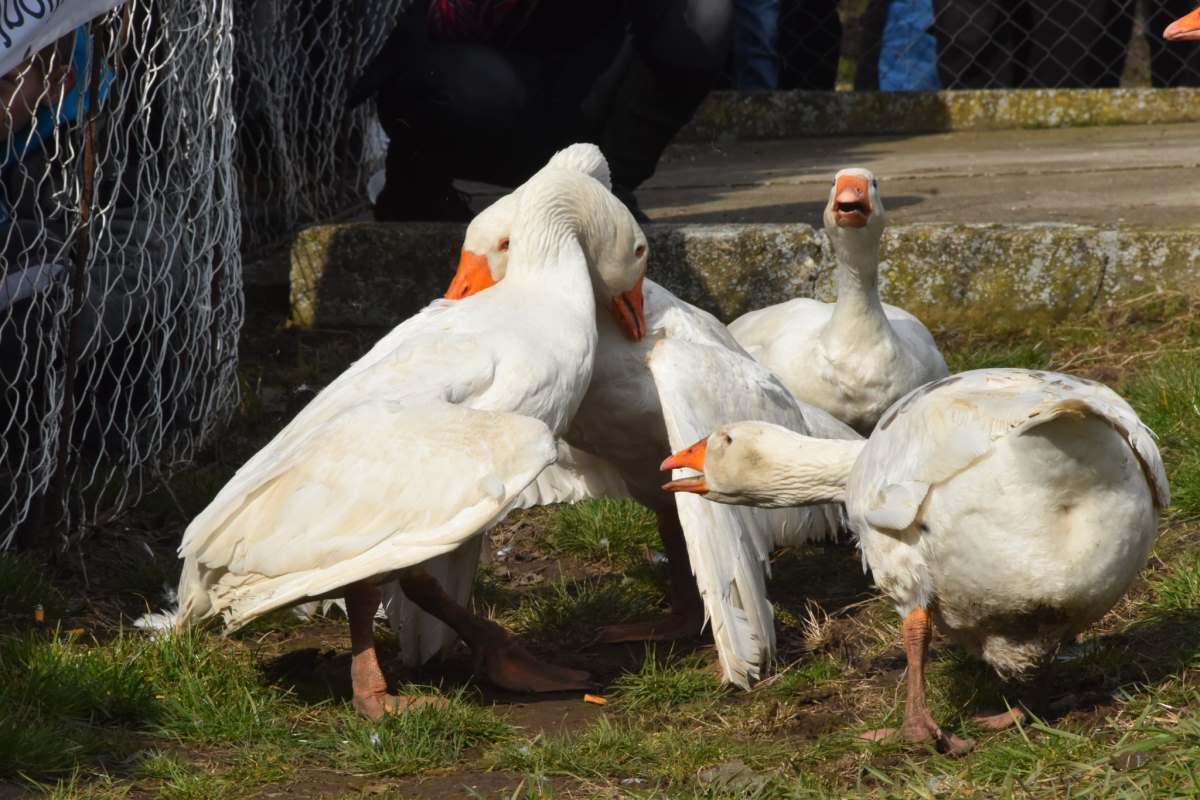

The 40th edition of the Gusanijada, the World Goose Fighting Championship, was held in Mokrin near Kikinda, gathering more than a hundred goose handlers and a total of 134 geese competing in three age categories, including a senior class. Both opposition and pro-government outlets agree that the final bout lasted around 17 minutes and was contested between geese named Cobra-Svemirac (or Kobra-svemirac) and Tyson, with Cobra-Svemirac, a three-year-old gander, ultimately taking the senior title and being dubbed the new "king" of Mokrin. They also converge on the basic characterization of Gusanijada as a long-running, locally important event now marking its 40th anniversary, staged as a formalized championship with clear rules, referees, and a large, enthusiastic crowd.
Coverage from both camps situates the championship within the broader tradition of goose breeding in northern Banat, describing it as an event designed to preserve and promote local goose husbandry in a region where the number of geese has sharply declined over recent decades. Both sides note that the championship has been registered or recognized in connection with UNESCO as part of intangible cultural heritage efforts, and emphasize that organizers frame the spectacle not only as entertainment but as a way to sustain rural customs and small-scale farming. They also highlight the event’s growing visibility beyond Serbia, pointing to international media interest, including Japanese television crews, as evidence that Mokrin’s goose-fighting tradition has become a distinctive cultural attraction with global curiosity.
Areas of disagreement
Cultural framing and values. Opposition-aligned sources tend to question whether the celebration of goose fighting as heritage is appropriate, often foregrounding ethical concerns about animal welfare and suggesting that invoking UNESCO status masks a fundamentally violent spectacle. Pro-government outlets instead present the event as a colorful and harmless folk custom, emphasizing the care given to the geese by their owners and downplaying or omitting any moral critique of the fights. While opposition media may frame the tradition as an example of outdated or provincial practices persisting due to state-backed nationalism, pro-government coverage casts it as a proud, modern showcase of Serbian rural identity aligned with international cultural standards.
Political symbolism and state role. Opposition coverage often portrays Gusanijada as informally co-opted by authorities, suggesting that local and national officials use the championship for photo opportunities and soft propaganda about supporting the countryside, without addressing deeper rural problems like depopulation and underinvestment. Pro-government outlets, by contrast, either do not foreground political figures or depict any official presence as routine support for culture and tourism, stressing that the state is helping preserve traditions and stimulate local economies. Where opposition media may link the event to broader critiques of government priorities, pro-government reporting isolates it as a non-political cultural celebration, avoiding any suggestion of instrumentalization.
Economic narrative and rural reality. Opposition-aligned reporting tends to juxtapose the spectacle of Gusanijada with the economic hardships of farmers and smallholders, arguing that a single festival cannot compensate for structural neglect and the decline of agriculture in the region. Pro-government sources highlight the championship’s role in attracting visitors, media attention, and small-scale tourism revenues, using it as an example of successful local branding and rural revitalization. The former angle emphasizes discrepancies between festive imagery and everyday struggles, while the latter accentuates success stories of breeders and organizers as proof that such events meaningfully boost village life.
International perception and image. Opposition outlets are more likely to question how goose fighting appears to foreign audiences, suggesting that international curiosity may mix fascination with stereotypes about Balkan backwardness and that Serbia risks being defined by spectacles rather than innovation. Pro-government coverage presents interest from foreign media, such as Japanese television crews, as unequivocally positive, arguing that any global attention enhances Serbia’s soft power and showcases its unique traditions. The critical side worries about reputational costs and ethical scrutiny, whereas the supportive side treats international cameras as validation that the event is culturally valuable and exportable.
In summary, opposition coverage tends to treat the 40th Gusanijada as a politically convenient but ethically and economically ambivalent spectacle that exposes deeper rural and image problems, while pro-government coverage tends to frame it as an uncontroversial cultural jewel that preserves tradition, supports the local economy, and positively broadcasts Serbia’s identity to the world.