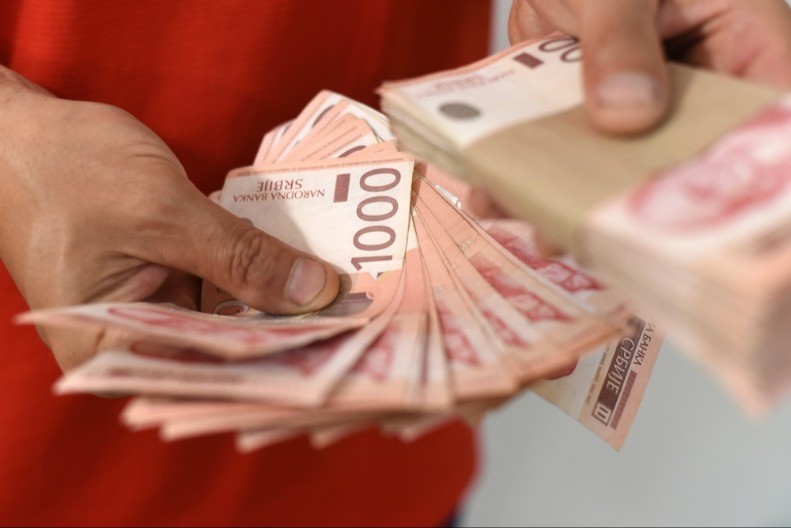



The Serbian Ministry of Agriculture, led by Minister Dragan Glamočić, has announced subsidies of 18,000 dinars per hectare for crop production, with payments planned before the spring sowing season and expected to arrive by the end of March. The measure will be implemented through a public call to agricultural farms, with detailed conditions to be published within about ten days, and is accompanied by a separate scheme of state-subsidized loans for farmers with interest rates ranging from 0% to 3%, and around 1% for women and producers under 40 years of age.
Across outlets, the subsidy is framed as part of a broader package to support Serbian agriculture, especially crop producers, at a time of heightened attention to farmer incomes and costs. Media on both sides acknowledge that the government is trying to respond institutionally through the Ministry of Agriculture and budgetary support, pairing direct per-hectare payments with favorable credit lines and international cooperation moves such as a memorandum with Malawi to strengthen agricultural technology exchange and support for small farms.
Areas of disagreement
Scale and sufficiency of support. Opposition media tend to question whether 18,000 dinars per hectare meaningfully covers rising fuel, fertilizer, and input costs, often presenting the figure as either too low, delayed, or a partial response to broader economic pressures on farmers. Pro-government outlets, by contrast, emphasize the nominal size and predictability of the subsidy and highlight that the money will arrive before sowing, framing the amount as a concrete and timely boost to producers. While opposition narratives portray the package as incremental or even symbolic, pro-government coverage treats it as a substantial fulfillment of state obligations toward agriculture.
Portrayal of farmer protests and demands. Opposition-aligned sources typically stress the legitimacy and persistence of farmer protests, arguing that demonstrators are driven by long-standing grievances about unstable prices, delayed payments, and inadequate subsidies. Pro-government outlets foreground the minister’s assertion that most key demands on subsidies and the agricultural budget are already being met, portraying protests as either partially outdated in their claims or influenced by political actors. In this contrast, opposition media cast the protests as a necessary pressure on an unresponsive system, while pro-government coverage frames them as partly addressed and sometimes amplified beyond their real economic base.
Assessment of government competence and intentions. Opposition reporting usually questions the government’s broader agricultural strategy, suggesting the subsidy announcement is reactive, tied to protest pressure or electoral considerations, and not part of a coherent long-term reform. Pro-government media instead present the measure as evidence of proactive governance, highlighting the combination of grants and favorable loans as a structured plan to modernize agriculture and strengthen competitiveness. Thus, opposition stories highlight inconsistency and short-termism, whereas pro-government narratives underscore planning, stability, and the leadership’s commitment to rural development.
Narratives on market conditions and imports. Opposition outlets often blame government policy for deteriorating market conditions, including low purchase prices and fears of cheap imports undercutting domestic producers, using these factors to argue that current subsidies are insufficient protection. Pro-government coverage gives prominence to the minister’s denial of increased milk imports and his claim that dairy and other segments remain profitable, seeking to reassure both farmers and the public about market stability. As a result, opposition media frame the state as failing to shield local producers from external shocks, while pro-government media depict the market as fundamentally sound and the new subsidies as an additional stabilizing tool.
In summary, opposition coverage tends to depict the 18,000-dinar subsidy as an inadequate, reactive concession amid unresolved structural problems and justified farmer unrest, while pro-government coverage tends to present it as timely, generous, and proof that the government is responsibly addressing farmer needs and safeguarding the agricultural sector.