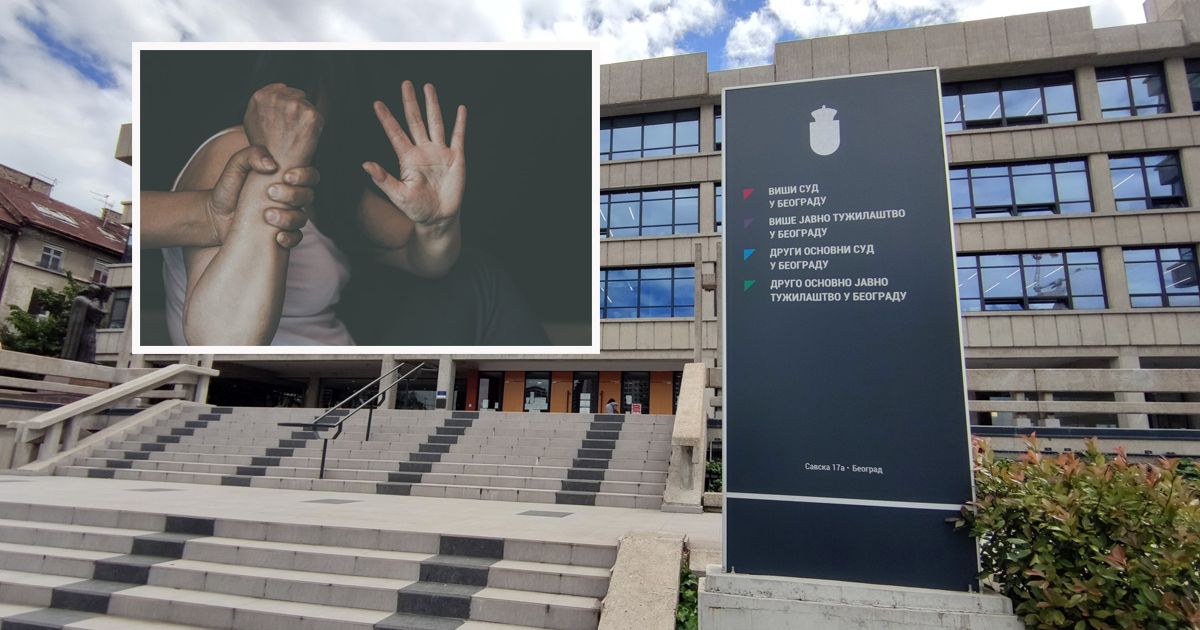



The available coverage agrees that the Higher Public Prosecutor’s Office in Belgrade has launched an investigation against two men, identified as Ž. Č. (34) and V. I. V. (31), on suspicion of human trafficking for the purpose of prostitution. Reports state that from May to November 2025, the primary suspect allegedly lured a young woman into an emotional relationship, isolated her from her family, and then coerced her into prostitution while threatening her with death and keeping her in conditions likened to slavery; the second suspect is accused of assisting in this exploitation. Media on both sides describe a pattern of financial control, including around 59 cash withdrawals totaling approximately 852,100 dinars from an account tied to the victim, presented as evidence of systematic economic exploitation.
Both opposition and pro-government outlets, where they report on the case, situate it within the broader legal framework of Serbia’s criminal code on human trafficking, sexual exploitation, and the role of the Higher Public Prosecutor’s Office and investigative authorities. They agree that the case exemplifies a pattern in which perpetrators exploit victims’ emotional vulnerability, abuse trust, and take advantage of difficult personal circumstances, and that financial records are increasingly central in documenting such crimes. Across the spectrum, coverage acknowledges that ongoing institutional reforms and public pressure have made trafficking and prostitution-related cases more visible in recent years, and that this case is treated as a serious test of enforcement against organized sexual exploitation.
Areas of disagreement
Framing of state institutions. Opposition-aligned sources tend to portray the investigation as overdue and symptomatic of systemic weaknesses, questioning whether police and prosecutors act consistently or only in high-profile cases, while suggesting failures in victim protection. Pro-government outlets instead emphasize the swift reaction of the Higher Public Prosecutor’s Office as proof that institutions are functioning, highlighting procedural steps as evidence of a strong rule-of-law response. Where opposition media are more likely to ask why warning signs were missed and whether other officials bear responsibility, pro-government reports generally avoid institutional self-critique and foreground the success of the ongoing investigation.
Political context and implications. Opposition coverage typically situates the case within a broader narrative of crime, corruption, and state capture, implying that human trafficking persists because of a permissive or politicized environment under the current government. Pro-government outlets largely strip the story of overt political context, presenting it as a criminal aberration handled correctly within the existing system and avoiding links to broader governance problems. When opposition media mention similar past scandals to argue there is a pattern of impunity, pro-government media instead stress that this case confirms the government’s declared zero-tolerance stance.
Victim portrayal and social causes. Opposition-aligned sources usually emphasize structural causes such as poverty, gender inequality, and lack of social services, framing the victim as someone failed by state institutions long before the crime was reported. Pro-government outlets focus more on the individual cruelty of the suspects and the dramatic details of emotional manipulation and threats, casting the victim primarily as an object of sympathy in a sensational crime story. While opposition media use the case to argue for broader reforms in social welfare and victim support, pro-government coverage tends to avoid systemic critique and underline personal responsibility of the accused.
Preventive reforms and accountability. Opposition coverage often demands clear accountability beyond the two suspects, asking what police, social services, and local authorities knew and calling for measurable reforms in monitoring, shelters, and witness protection. Pro-government outlets, by contrast, stress that current legal provisions and reform steps are adequate and that the key task is to let investigators and courts finish their work, occasionally pointing to existing initiatives as sufficient. Opposition media frame the case as evidence that announced reforms have not gone far enough, whereas pro-government media present it as confirmation that reforms already in place enable such prosecutions.
In summary, opposition coverage tends to use the Belgrade trafficking investigation to question institutional effectiveness and highlight systemic and political failures, while pro-government coverage tends to showcase the case as proof that existing laws and state bodies are actively and adequately combating such crimes.