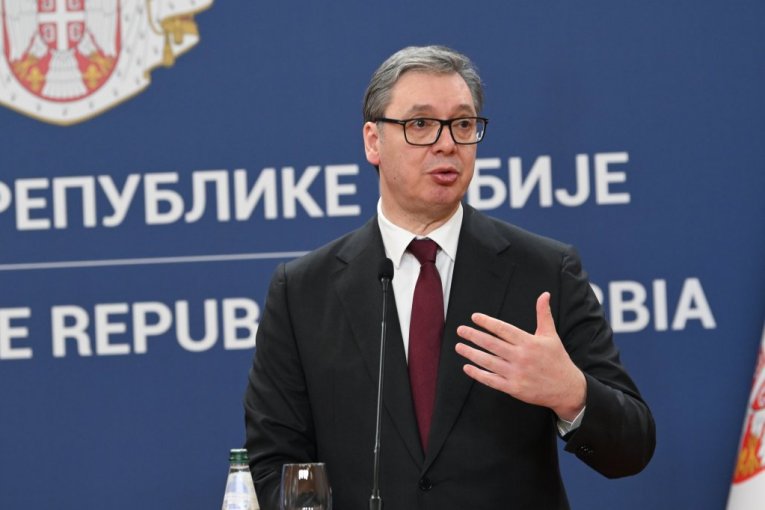

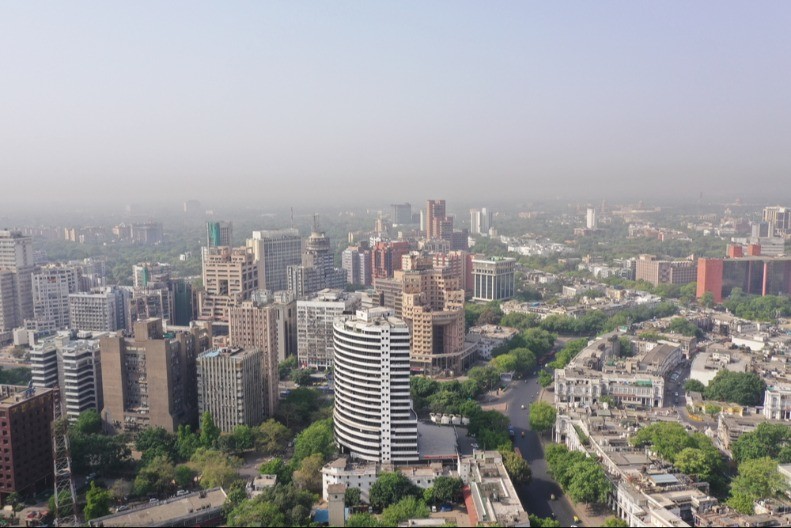
President Aleksandar Vučić has traveled to India, with pro-government media specifying New Delhi as the destination, to participate in a major summit focused on artificial intelligence. Coverage notes that during this visit he is due to attend an AI Summit, hold meetings with Indian President Droupadi Murmu and Prime Minister Narendra Modi, and engage with other international officials present at the event; the trip was flagged in advance as a key diplomatic engagement and then reported as having begun once he arrived in India.
Across outlets there is acknowledgement that the summit emphasizes artificial intelligence, innovation, and digital transformation and that these themes are framed as relevant to Serbia’s economic development and global positioning. It is also commonly noted that Vučić’s recent domestic activities, such as awarding honors on Statehood Day and stressing peace, institutional strengthening, and defense capabilities, form a backdrop to his participation in the summit, tying foreign policy appearances to broader narratives about Serbia’s stability and modernization.
Points of Contention
Significance of the visit. Pro-government outlets portray Vučić’s trip as a high-profile diplomatic mission that elevates Serbia’s visibility at a “significant global event,” stressing that meetings with top Indian officials underscore Belgrade’s importance on the world stage. Opposition-leaning coverage, by contrast, is more likely to question whether the summit is truly pivotal for Serbia or mostly symbolic, sometimes framing it as another carefully staged foreign visit used to generate positive headlines rather than concrete outcomes.
Domestic political framing. Pro-government media closely link the India visit with Vučić’s recent Statehood Day activities, reinforcing a narrative of a responsible leader focused on peace, stronger institutions, and a capable military, and suggesting that his international engagements are extensions of this domestic agenda. Opposition sources tend to decouple the trip from these state-building claims, arguing that such messaging serves to consolidate personal rule and distract from democratic deficits, protests, or governance controversies at home.
Economic and technological benefits. Pro-government coverage emphasizes that engagement on AI, innovation, and digital transformation will boost Serbia’s economic growth and international competitiveness, often highlighting anticipated investments, partnerships, or knowledge transfer, even when details remain vague. Opposition outlets typically demand clearer evidence of tangible gains, casting doubt on whether previous high-profile visits have delivered matching economic or technological payoffs and suggesting that photo opportunities may be prioritized over substantive, transparent agreements.
Foreign policy positioning. Pro-government narratives portray the India summit as proof of Serbia’s balanced, independent foreign policy, cultivating ties with a major non-Western power while keeping multiple international channels open. Opposition media are more inclined to scrutinize whether such moves genuinely strengthen Serbia’s strategic position or risk ambiguity in relations with the EU and other partners, sometimes arguing that the government uses non-aligned optics to avoid deeper commitments to democratic and rule-of-law standards.
In summary, opposition coverage tends to frame Vučić’s India trip as a politically choreographed event whose real significance and benefits are uncertain, while pro-government coverage tends to cast it as a landmark diplomatic and economic opportunity that confirms Serbia’s rising global role under Vučić’s leadership.