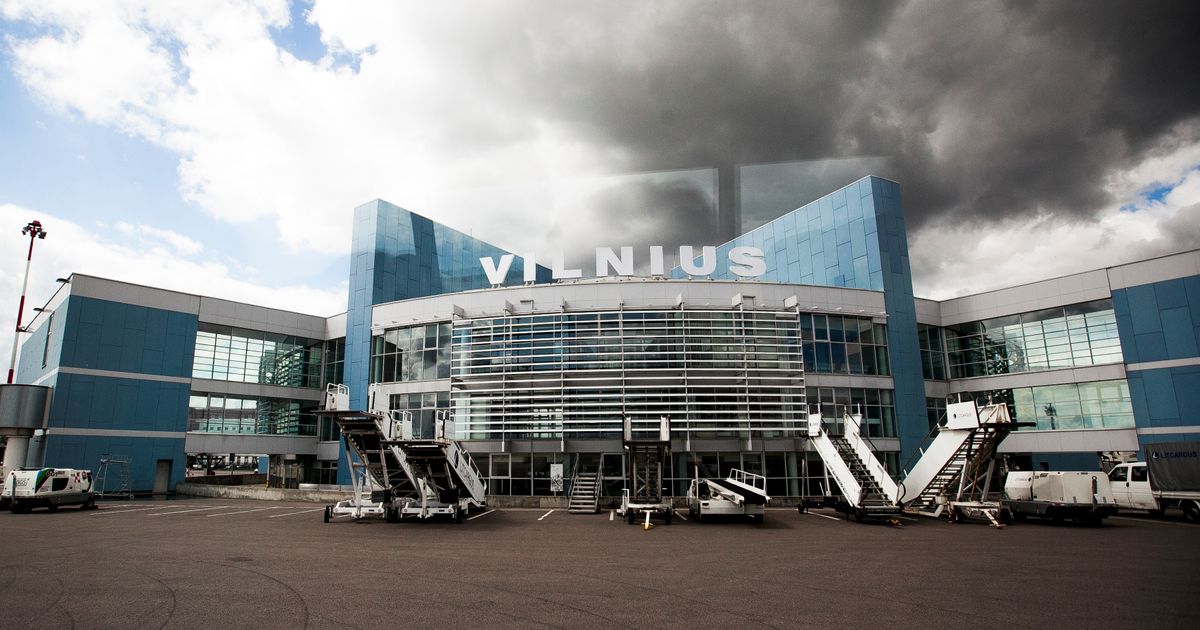


Lithuanian and regional media agree that airspace over Vilnius was temporarily restricted after unidentified objects, described as balloons or balloon‑like navigation markers, were detected above or near the capital. Authorities issued warnings to airlines and pilots about possible delays, diversions, and schedule changes, and at least one inbound flight from Tenerife to Vilnius was rerouted to Kaunas Airport while the situation was assessed. Coverage also notes that the restrictions were geographically limited to the Vilnius area, that normal civil aviation safety protocols were followed, and that pilots received specific notices about potential hazards in the affected corridor. In parallel regional reporting, Poland is described as having deployed fighter jets and briefly closed the airports in Rzeszów and Lublin in response to a large‑scale Russian attack on Ukraine, highlighting how closely Baltic and Polish airspace are monitored for aerial anomalies.
Across outlets, there is shared context that the Baltic region has become increasingly sensitive to unconventional aerial intrusions, ranging from suspected smuggling operations using balloons to possible probing of air defenses. Media on both sides reference established aviation safety procedures, such as issuing notices to airmen, temporarily restricting airspace, and diverting flights as precautionary measures, as standard tools used by civil aviation and defense authorities. There is broad agreement that Vilnius Airport was not the only facility recently affected by heightened security measures, and that neighboring Poland’s response to military threats over Ukraine forms part of the same broader regional security environment. Both opposition and pro‑government sources situate the Vilnius restrictions within ongoing concerns over border security, aerial surveillance, and the need to coordinate civilian and military responses to ambiguous objects in shared European airspace.
Points of Contention
Nature and framing of the threat. Opposition‑aligned sources tend to cast the balloons as either a sign of systemic border‑control weakness or a potential hybrid threat, emphasizing uncertainty over whether they are simple smuggling tools or more sinister reconnaissance devices. Pro‑government outlets more often describe them in practical, technical terms as unidentified balloons or navigation markers, foregrounding aviation safety and downplaying speculative geopolitical interpretations. Where opposition media might stress the symbolism of balloons "restricting" a NATO capital’s airspace, pro‑government reporting typically stresses that restrictions were temporary, controlled, and proportional to the risk.
Government competence and preparedness. Opposition coverage is likely to question how such balloons could reach sensitive airspace over Vilnius, using the incident to criticize surveillance gaps, delayed detection, or inadequate deterrence against smugglers or hostile actors. Pro‑government outlets, by contrast, emphasize that authorities detected the objects, immediately warned airlines and pilots, and smoothly diverted at least one flight to Kaunas, portraying the episode as evidence that safety systems and inter‑agency coordination work as intended. While opposition narratives frame the disruption as avoidable and symptomatic of deeper governance flaws, pro‑government narratives frame it as a textbook example of precautionary crisis management.
Link to regional security and Russia. Opposition media are more inclined to connect the Vilnius balloons directly to broader Russian pressure or hybrid warfare, pointing to Poland’s simultaneous fighter‑jet deployments and airport closures as signs of a coordinated threat environment. Pro‑government sources tend to keep the Lithuanian balloon incident conceptually separate from Poland’s response to Russian attacks on Ukraine, mentioning the Polish measures mainly as contextual background to underscore general regional vigilance. As a result, opposition stories often imply a mounting, Russia‑driven security crisis encroaching on everyday life, whereas pro‑government stories present a calmer picture of parallel but not necessarily linked events.
Impact on citizens and accountability. Opposition coverage tends to foreground the inconvenience and anxiety caused to passengers, using diverted flights and possible schedule disruptions as a springboard to demand explanations, clearer communication, and possibly political accountability from aviation and defense officials. Pro‑government coverage acknowledges the diversions but minimizes the drama, highlighting that rerouting to Kaunas was orderly and temporary, and suggesting that minor passenger disruption is a reasonable price for rigorous safety standards. Opposition narratives therefore stress the public’s right to question why such incidents occur at all, while pro‑government narratives stress public reassurance and the normality of short‑term restrictions in a tense security environment.
In summary, opposition coverage tends to treat the Vilnius balloon incident as symptomatic of deeper security and governance vulnerabilities demanding sharper scrutiny, while pro-government coverage tends to depict it as a contained technical challenge that existing institutions handled competently within a broader but manageable regional security context.