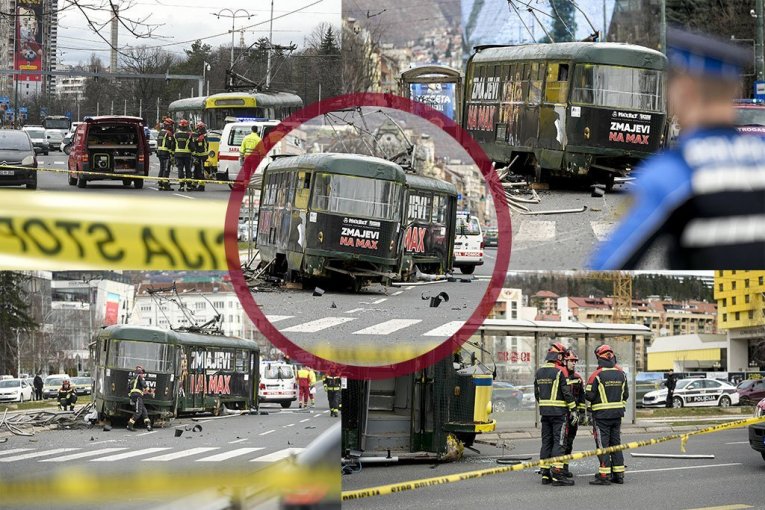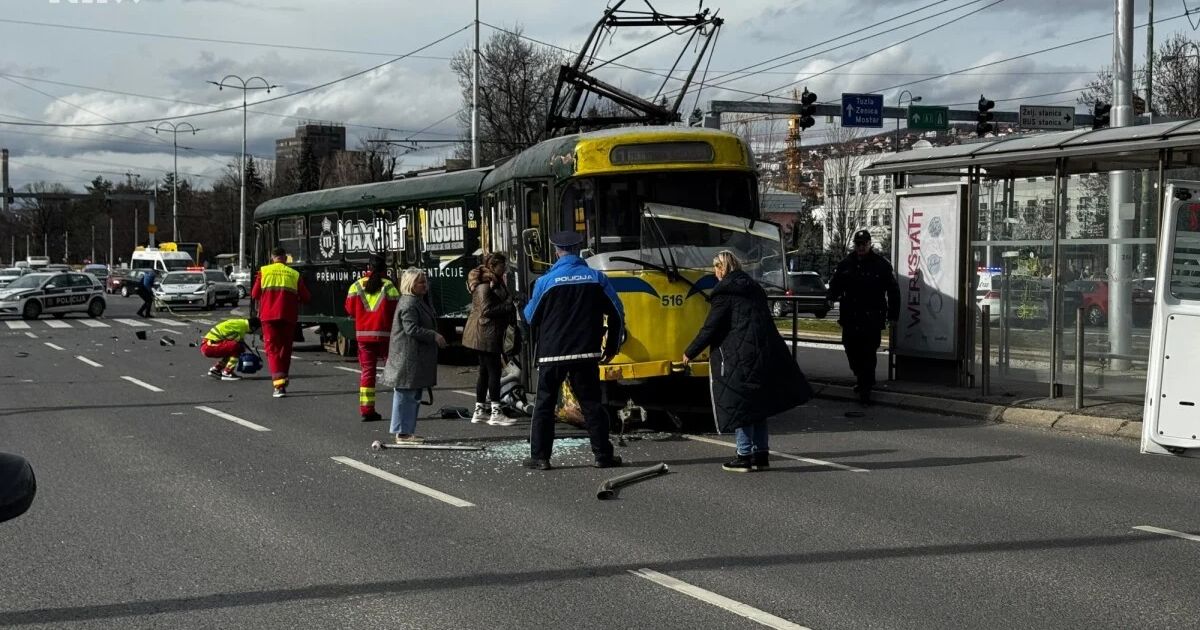



The latest coverage agrees that a tram in Sarajevo derailed and caused a fatal accident, killing at least one young person and seriously injuring others, including at least one student. Both sides report that the driver, identified as Adnan, was initially detained and later released from custody after a hearing, during which he said he was not guilty and blamed a technical malfunction while expressing regret for the victims and their families. Media across the spectrum note that preliminary investigative findings, as communicated by authorities, point toward human error as a likely cause, even as the driver disputes this, and that images and video from immediately after the crash have circulated widely, fueling intense public debate.
Outlets broadly agree that the accident triggered large protests in Sarajevo, led particularly by youth and students who gathered near the accident site and in front of Cantonal institutions to demand accountability and improved safety. It is consistently reported that Sarajevo Canton Prime Minister Nihad Uk resigned, publicly framing his move as an act of political responsibility and a response to the protesters’ message, stating that the citizens’ and young people’s demands were more important than his position. Both opposition and pro-government coverage describe an ongoing investigation into the tram system’s condition and operational procedures, as well as discussion of institutional responsibility and possible reforms to public transport oversight, maintenance, and safety standards.
Points of Contention
Cause and responsibility. Opposition-aligned sources tend to emphasize preliminary findings of human error as evidence of broader systemic negligence and political mismanagement, stressing that years of underinvestment and poor governance made such an error inevitable. Pro-government outlets foreground the driver’s insistence on a technical malfunction and highlight the ongoing investigation, stressing that final responsibility cannot be assigned until experts complete their work. While opposition media frame the event as a predictable outcome of a dysfunctional system, pro-government media balance mention of human error with the possibility of mechanical failure and institutional complexity.
Portrayal of the tram driver. Opposition coverage is more likely to portray the driver as part of a long-abused workforce, suggesting he is a tragic figure operating in unsafe conditions created by authorities, and questioning whether he is being used as a scapegoat. Pro-government outlets give more space to his personal statements of innocence and remorse, including emotional details and post-accident photos, but also repeat official hints at human error, creating a more individualized narrative. In opposition narratives the driver’s fate illustrates systemic rot, while in pro-government narratives he appears as a conflicted central character within a still-unclear incident.
Framing of the prime minister’s resignation. Opposition-aligned media generally frame Nihad Uk’s resignation as a belated and insufficient gesture, arguing that deeper structural change and wider resignations across transport and government institutions are needed, and sometimes suggesting he is trying to deflect from longer-term failures. Pro-government sources highlight his resignation as a responsible, almost exemplary act of political accountability, echoing his own language that citizens’ voices, especially those of youth, must come before office. Where opposition outlets stress continuity of mismanagement and demand broader purges, pro-government coverage stresses that the resignation is a meaningful step responding to public pressure within institutional norms.
Characterization of protests and public anger. Opposition media tend to depict the protests as a broad, organic uprising of citizens against chronic corruption, incompetence, and neglect of public services, underlining anger not only over the accident but over long-standing grievances. Pro-government outlets acknowledge the protests and quote youth demands, but focus more on police management of gatherings, the detention of a few individuals, and assurances that institutions are listening and working on solutions. Opposition stories use the protests to argue the government has lost legitimacy, while pro-government stories present them as a powerful yet constructive signal that is already prompting corrective action.
In summary, opposition coverage tends to use the accident, the driver’s release, and the prime minister’s resignation as evidence of deep systemic failure and inadequate accountability, while pro-government coverage tends to stress individual responsibility, due process, and the resignation as a sign that institutions are responsive and capable of self-correction.