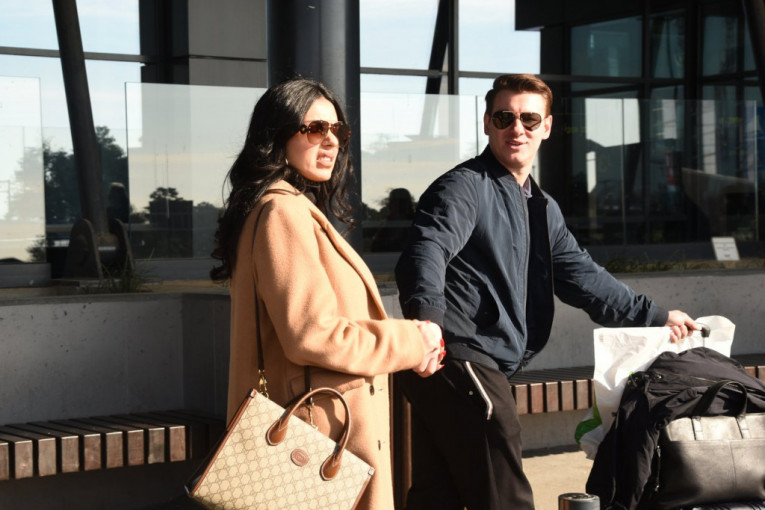
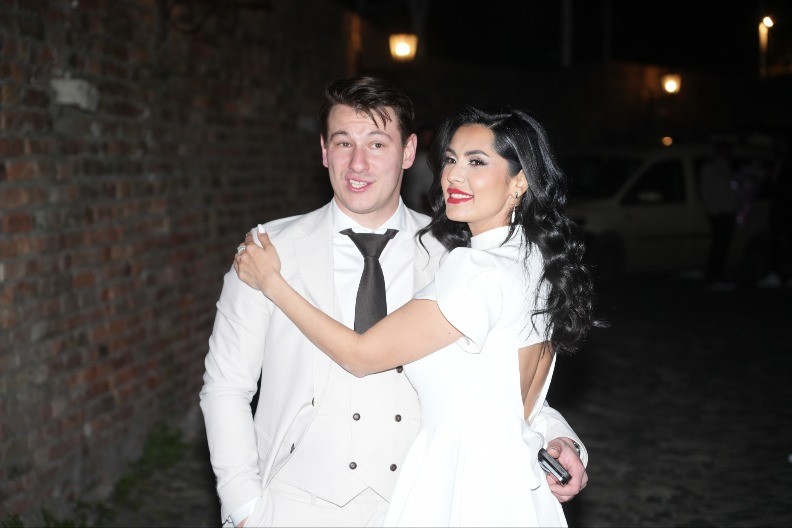
Singer Tanja Savić has publicly discussed relationship troubles that arose soon after her engagement to footballer Muhamed Bešić, confirming that they argue frequently and are in a turbulent period. Both types of outlets report that she openly admitted the quarrels in recent statements, that Bešić bought her the engagement ring after she made it clear she wanted one, and that they have been seen together at Belgrade Airport and at her performances, where he supports her career despite private tensions. The reports agree that the engagement is recent, that there is no set wedding date, and that Savić has hinted she may have stepped back from active wedding planning.
Across the spectrum, coverage notes that Savić frames health and emotional stability as more important than immediately formalizing the relationship, and that she presents the arguments as a normal but serious challenge for a couple under public scrutiny. Outlets highlight their cross-border, high-profile pairing—an established pop singer and a professional footballer—as part of the pressure on the relationship, and stress that their disagreements coexist with expressed mutual support. It is consistently reported that her comments came in the context of media questions about whether the engagement is still on track and whether she has "given up" on the wedding, and that she has not announced any definitive breakup.
Points of Contention
Tone toward the relationship. Opposition-aligned outlets tend to frame Savić’s admission of frequent arguments in a more dramatic light, suggesting the engagement is on the brink of collapse and emphasizing phrases like “they’re done” or “no wedding” as signs of impending breakup. Pro-government outlets, while repeating the same quotes about quarrels, usually balance them with mentions of mutual support, shared appearances, and her insistence that health and harmony matter more than a rushed ceremony, presenting the relationship as strained but ongoing.
Agency and responsibility. Opposition coverage is more likely to imply that the relationship troubles stem from deeper incompatibilities or from Bešić’s alleged behavior and “bans” on aspects of her life, hinting that Savić is sacrificing too much. Pro-government pieces more often highlight her own role in initiating the engagement by hinting she wanted a ring, as well as her choice to de-prioritize the wedding, portraying the turmoil as a mutual, adult negotiation rather than the fault of one partner.
Framing of Savić’s public image. Opposition outlets tend to use the story to paint Savić as a figure caught in yet another personal drama, reinforcing a narrative of instability and emotional volatility that attracts clicks but undercuts her professional stature. Pro-government media generally depict her as candid and self-aware, a successful singer navigating ordinary relationship issues under the magnifying glass of fame, and they underscore her work commitments and public performances to preserve a positive image.
Use of sensationalism versus reassurance. Opposition reporting often leans into alarmist headlines and speculative language about canceled weddings and possible breakups, framing every argument as a turning point and leaving readers with a sense of looming finality. Pro-government coverage uses striking titles but quickly softens them in the text, stressing that no final decision about the wedding has been made and that the couple continues to appear together, aiming to reassure audiences that this is turbulence rather than an outright split.
In summary, opposition coverage tends to amplify the conflict, hint at an imminent breakup, and question the stability of the engagement, while pro-government coverage tends to echo the same facts but wrap them in a more measured, sympathetic narrative that stresses mutual support and the possibility of working through current tensions.