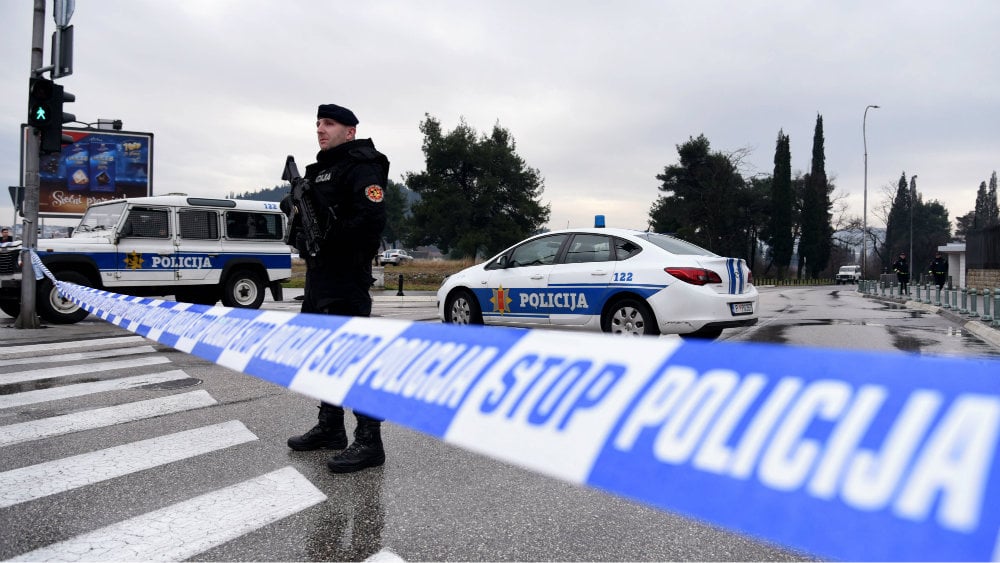


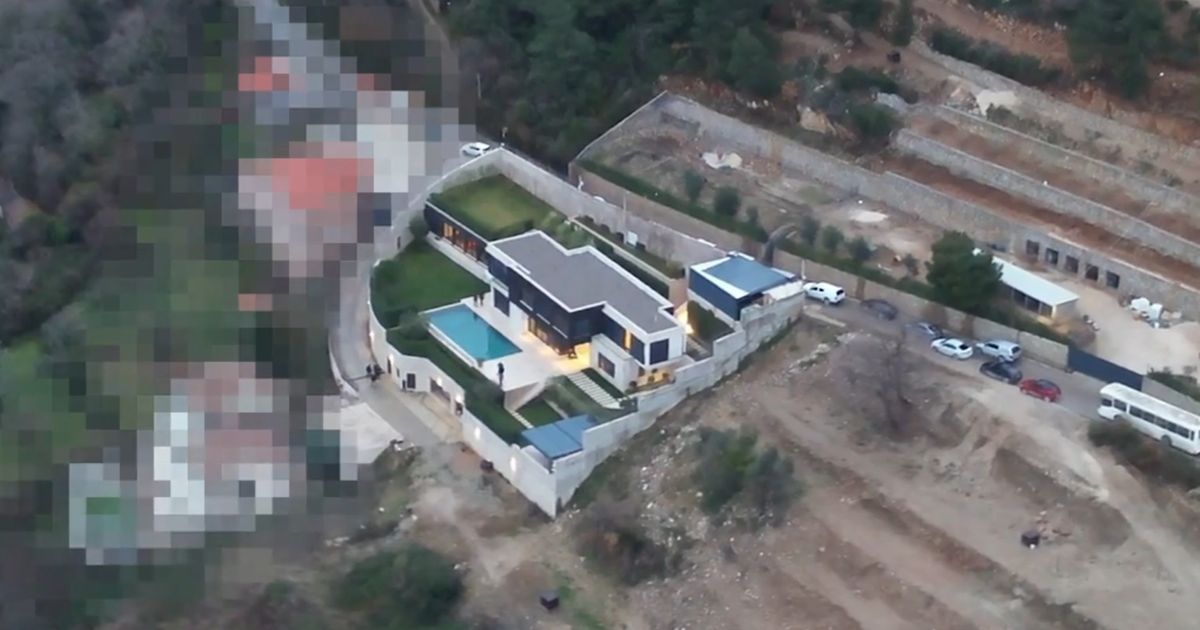
Montenegrin police conducted a large-scale operation in and around Kotor, with a heavy, highly visible police presence and dozens of officers surrounding and searching several locations associated with the Kavački clan. Both opposition and pro-government outlets agree that properties linked to alleged clan leader Radoje Zvicer and his wife were among the main targets, with raids extending to nearby coastal areas such as Đurašević Coast and, according to some reports, Tivat. They also concur that multiple luxury vehicles were seized, including a high-end Brabus car valued at around half a million euros, alongside several other cars, cash estimated at around 17,000 euros, and various electronic and technical devices, all of which are now subject to further forensic and financial investigation.
Coverage from both sides situates the raids within Montenegro’s ongoing struggle against organized crime, focusing on the long-standing influence of the Kavački clan in Kotor and the broader coastal region. The outlets agree that the operation was carried out by national police structures as part of a wider, continuing campaign to dismantle criminal networks and trace the origins of suspected illicit assets. They also acknowledge that the authorities intend to use the seized vehicles, cash, and equipment as potential evidence in future proceedings, reflecting a coordinated institutional push toward asset-based law enforcement and signaling that Montenegro’s security and judicial bodies are under pressure—domestic and international—to demonstrate concrete results in tackling criminal clans.
Points of Contention
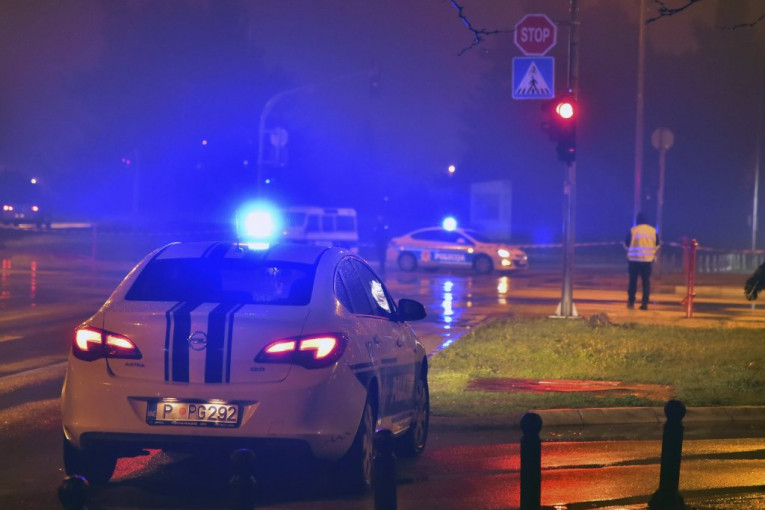
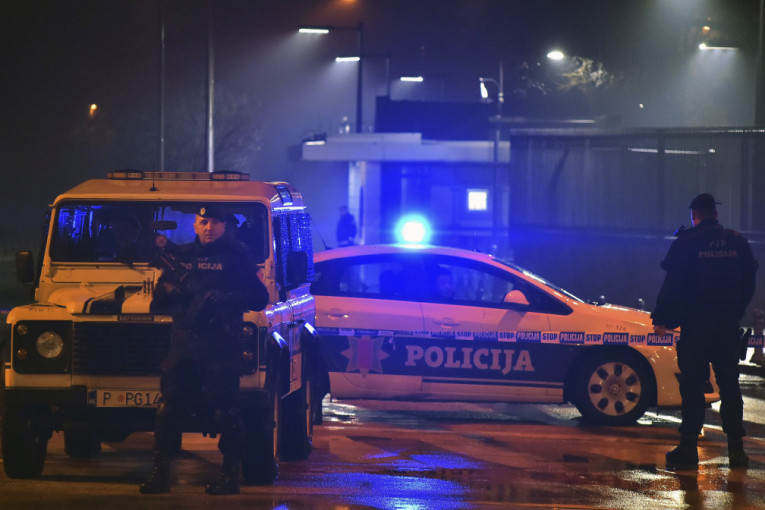
Framing of the operation. Opposition-aligned outlets emphasize the raid as a dramatic “state of siege” in Kotor, focusing on roadblocks, the number of officers, and the sense of a city under occupation, implicitly questioning whether the show of force is proportionate. Pro-government outlets instead portray the same events as a precise, successful police action, highlighting coordination, professionalism, and the breadth of targets across Kotor, Tivat, and the coast. While the opposition frame suggests over-militarization and a possible performative spectacle, pro-government reporting treats the operation as a model example of robust state capacity.
Focus of storytelling. Opposition coverage centers on the impact on local residents, reporting citizen observations of cordoned-off areas and the anxiety produced by the heavy police presence, with relatively sparse detail on seized assets. Pro-government media dwell on the luxury and conspicuous wealth of the clan, foregrounding images and descriptions of high-end cars, expensive property, and social media posts by family members to dramatize the scale of criminal enrichment. In doing so, opposition outlets situate the story in terms of local security and daily life, while pro-government outlets turn it into a morality tale contrasting criminal opulence with state enforcement.
Political implications and motives. Opposition sources implicitly raise questions about timing and intent, suggesting the operation may serve as political theater to present the authorities as tough on crime without addressing deeper systemic ties between power structures and criminal groups. Pro-government outlets either omit such skepticism or actively counter it by framing the raid as further evidence that current institutions are breaking with past complicity and decisively targeting formerly untouchable figures. Thus, opposition narratives hint at continuity of entrenched networks behind the scenes, whereas pro-government narratives insist the raids prove a genuine shift toward accountability.
Assessment of institutional credibility. Opposition reporting tends to treat official statements cautiously, relying on eyewitness accounts and visible deployments, and leaving open whether the investigation and asset tracing will lead to meaningful prosecutions. Pro-government reporting adopts a more trusting tone toward police and prosecutorial claims, underscoring that the seized cash and vehicles will be scrutinized and used as evidence, and suggesting that institutions are increasingly effective. Consequently, the opposition perspective stresses the gap between spectacle and long-term justice, while the pro-government perspective highlights incremental strengthening of rule-of-law institutions.
In summary, opposition coverage tends to cast the raids as a highly visible, possibly performative show of force that unsettles residents and may mask unresolved ties between power and organized crime, while pro-government coverage tends to present them as a well-executed, evidence-rich blow against a lavishly funded criminal clan that showcases the growing strength and resolve of state institutions.


.jpg)