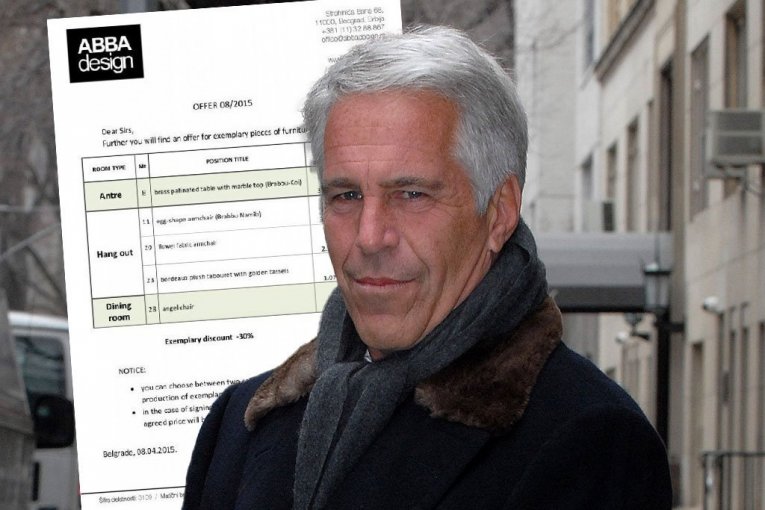

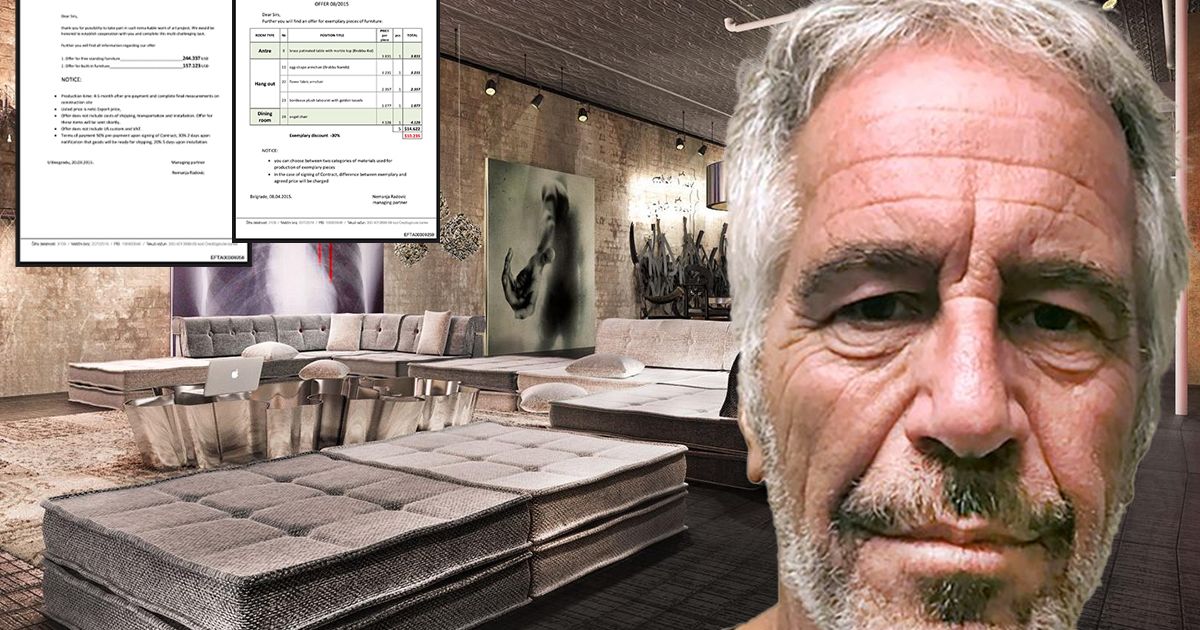
Newly released documents from the US Department of Justice on Jeffrey Epstein include references to a Serbian luxury furniture producer, ABBA Design, with both opposition and pro-government outlets agreeing on the core facts: the documents date from 2015 and contain two offers for custom high-end furniture for Epstein’s properties. All sides report that one offer, covering extensive built-in and freestanding furniture, was valued in the hundreds of thousands of dollars (reported ranges go from over 250,000 to over 400,000), and a second, smaller offer for showcase pieces such as marble-top tables and designer chairs was initially priced above 14,000 dollars and then discounted to just over 10,000 dollars. Media across the spectrum concur that these figures come from official US documents, list specific items and dimensions, and connect them explicitly to Epstein’s residences.
Across coverage, there is also broad agreement on the contextual elements: the documents are part of a wider release of US investigative files on Epstein, they show his extensive global spending on bespoke luxury goods, and they illustrate how his network of commercial relationships reached into smaller foreign firms, including in Serbia. Outlets on both sides note that ABBA Design is a legitimate Serbian company specializing in custom furniture for affluent international clients, and they stress that appearing in the documents does not in itself indicate criminal activity by the firm. Both opposition and pro-government sources present the story as a secondary detail in the larger, already well-known Epstein scandal, using it mainly to highlight how far his purchasing network extended and how Serbian companies can surface unexpectedly in high-profile foreign cases.
Points of Contention
Nature and extent of cooperation. Opposition-aligned sources tend to emphasize uncertainty or inconsistency around whether the deal was fully executed, stressing that offers and price lists do not prove final delivery, and sometimes highlighting earlier statements suggesting the project was not realized. Pro-government outlets, by contrast, foreground the director’s on-the-record claim that the job was “successfully realized,” describing the collaboration as a completed and legitimate export to a demanding foreign client. Where opposition media underscore the discrepancy between the US documents and company statements, pro-government media normalize the relationship as a straightforward commercial transaction.
Implications for Serbia’s image. Opposition outlets typically frame the mention of a Serbian firm in Epstein’s files as a potential reputational liability, implying that it symbolically links Serbia to a notorious convicted sex offender and raises questions about due diligence in export markets. Pro-government coverage instead treats the story as a neutral or even mildly positive sign that Serbian craftsmanship is competitive on the global luxury market, downplaying any stigma attached to the Epstein name. While opposition sources warn that the association could be used to criticize Serbia internationally, pro-government sources suggest it is merely an unfortunate coincidence involving an otherwise respectable client at the time.
Responsibility and moral distance. Opposition-aligned media are more likely to probe whether Serbian businesses have a responsibility to vet controversial clients and to argue that even indirect ties to such figures warrant public scrutiny and ethical reflection. Pro-government outlets stress that the orders took place before many details of Epstein’s crimes were widely known, and that ABBA Design could not reasonably be expected to investigate the private life of a foreign buyer. Thus, opposition sources lean toward framing the episode as an example of moral risk in global business, while pro-government sources insist the company bears no moral or legal blame beyond having sold furniture to a then-prominent financier.
Political framing and domestic relevance. Opposition coverage often uses the story as a springboard to broader narratives about opaque international connections, elite impunity, and how Serbian institutions react when the country’s name appears in scandal-related documents abroad. Pro-government media, however, largely strip the episode of political significance, presenting it as a curiosity from foreign legal paperwork and focusing on the company’s technical professionalism rather than any systemic issues. Opposition outlets may hint that such cases show how easily Serbia becomes entangled in controversial global networks, whereas pro-government outlets resist drawing any link between this commercial contact and domestic governance or policy.
In summary, opposition coverage tends to stress ambiguity, reputational risk, and ethical questions raised by a Serbian firm’s appearance in Epstein-related files, while pro-government coverage tends to present the relationship as a routine, legitimate export deal with no broader political or moral implications.