

pro-government
REGION BRUJI O POTEZU HRVATA Pogledajte uz koju pesmu su proslavili osvajanje bronze (VIDEO)
Ponovo su zgrozili sve
2 months ago
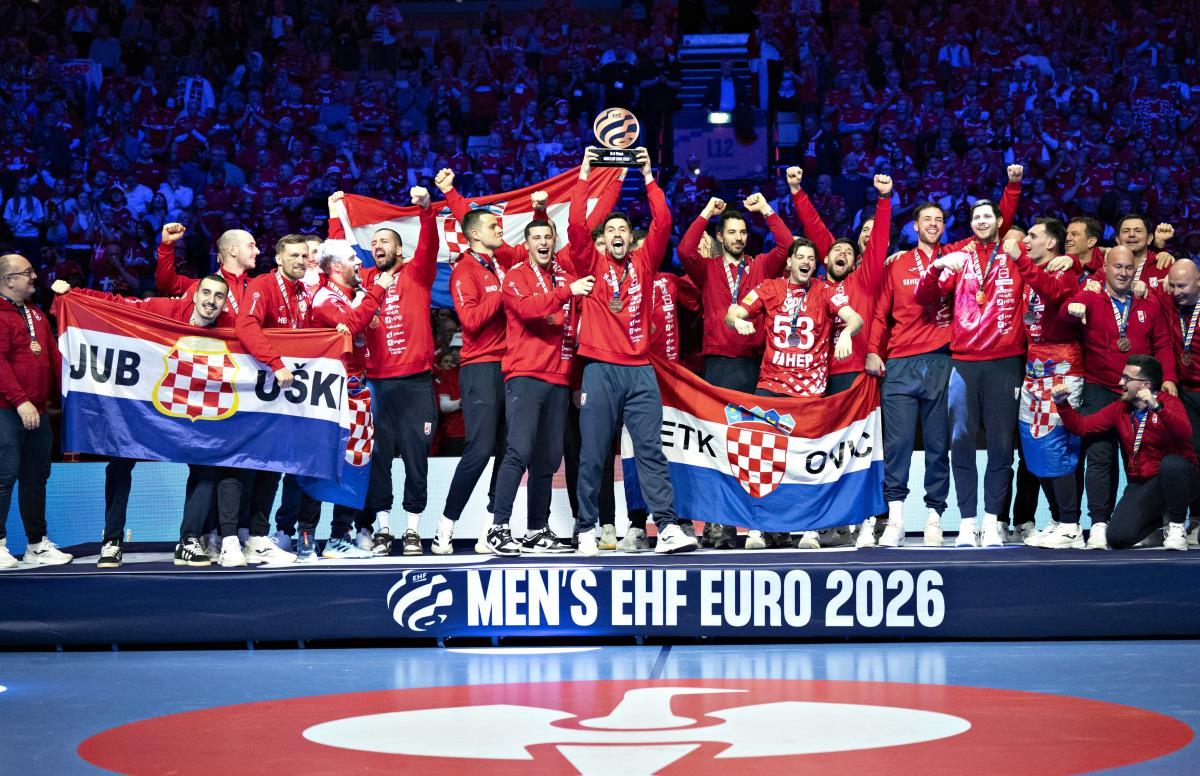
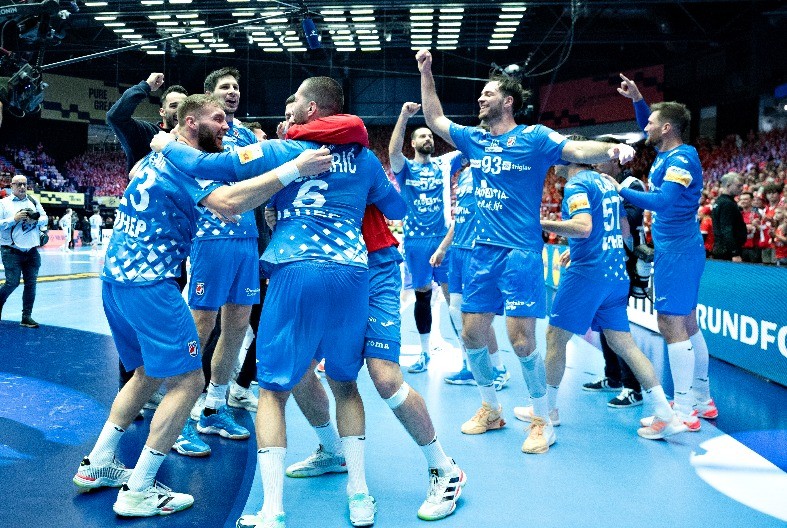
After Croatia’s men’s handball team won the bronze medal at the European Championship, a public reception originally planned in Zagreb’s Ban Jelačić Square was canceled following a dispute over the choice of musical performer. Both sides report that the Croatian Handball Federation, players, and staff wanted singer Marko Perković Thompson to perform, that some players personally contacted him and received his congratulations, and that the City of Zagreb refused this proposal. Outlets agree that the Croatian Handball Federation then announced there would be no official welcome in the capital under these conditions, even as other cities, including Sinj, offered to organize their own celebrations, and that the controversy has drawn widespread regional attention and criticism.
Coverage from both camps situates the dispute within the long-standing sensitivity around Thompson’s public performances and the political symbolism attached to them in Croatia. They agree that the institutions involved are the Croatian Handball Federation as the organizer, the City of Zagreb as the host authority, and local governments in other cities that signaled willingness to stage alternative events. There is broad acknowledgment that the clash arose from differing views on the appropriateness of featuring Thompson at an official civic celebration, and that the outcome has turned what should have been a unifying sporting celebration into a politically charged cultural and institutional standoff.
Responsibility and blame. Opposition-aligned sources tend to frame the cancellation as the predictable result of the federation and players insisting on a divisive singer for an official civic event, blaming sports officials for politicizing a state-like ceremony. Pro-government outlets instead largely pin responsibility on the City of Zagreb and liberal political elites, portraying them as having delivered a "slap" to the team by denying their preferred way of celebrating. While opposition reporting emphasizes institutional duty and inclusivity standards, pro-government reporting stresses perceived disrespect to national heroes and frames the city’s rejection as the decisive cause.
Characterization of the players and federation. Opposition media generally depict the players and the Croatian Handball Federation as having shown poor judgment or naivety by inviting a controversial performer, stressing that athletes should avoid culture-war symbolism. Pro-government outlets, by contrast, portray the players as patriots under attack, highlighting their initiative in calling Thompson and describing them as victims of an ideologically driven establishment. Where opposition coverage tends to nuance internal differences within the team and federation, pro-government reports speak more uniformly of "Croatian handballers" as wronged and shamed by political authorities.
Portrayal of Thompson and symbolism. Opposition-aligned sources are likely to describe Thompson as a polarizing or extremist-associated figure whose presence would be inappropriate at an inclusive, official city event and could damage Croatia’s image. Pro-government outlets instead normalize or celebrate him as a patriotic musician beloved by fans, suggesting that objections to his appearance are overblown or ideologically motivated. Thus, opposition reporting treats the controversy as a necessary stand against problematic symbolism, whereas pro-government reporting casts it as an attack on traditional patriotic expressions.
Framing of wider political stakes. Opposition coverage tends to embed the story in broader debates about secular, civic standards for public events and the separation of sport from partisan or nationalist iconography, often downplaying regional outrage as sensationalism. Pro-government outlets frame the episode as a national scandal and a moral failing of the current Zagreb leadership, amplifying language of "shame," "disgrace," and a region "in shock" to argue that patriotic Croatia is being humiliated by its own institutions. The former interprets the clash as a governance and values issue, while the latter presents it as a culture-war flashpoint that reveals a disconnect between ordinary citizens and liberal authorities.
In summary, opposition coverage tends to stress institutional responsibility, inclusivity, and the risks of politicizing sport through a controversial singer, while pro-government coverage tends to stress perceived disrespect to national heroes, legitimize Thompson as a patriotic choice, and cast liberal city authorities as the primary villains of the scandal.
pro-government
Bruka Hrvata
2 months ago