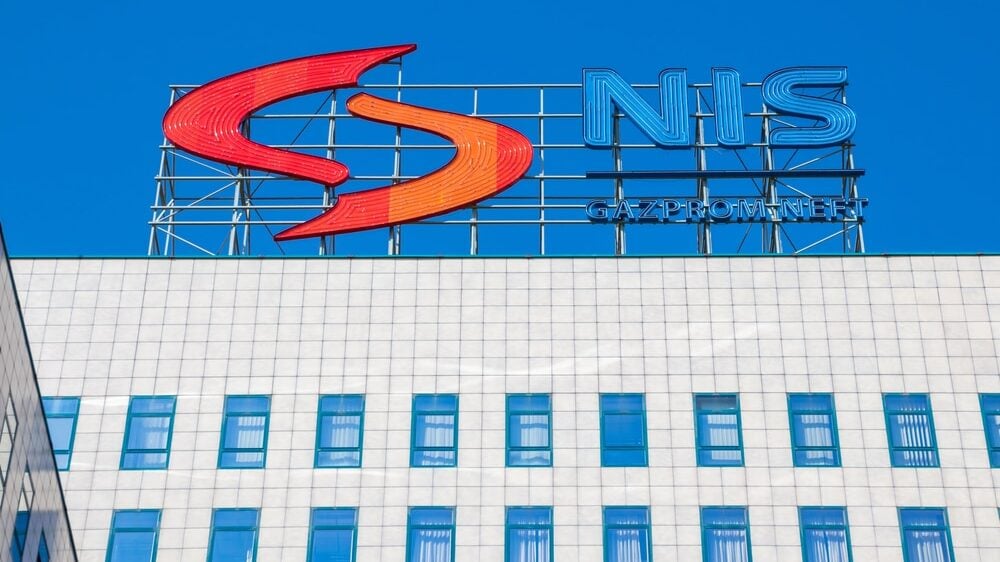
President Aleksandar Vučić is quoted across both opposition and pro-government media as saying that the Hungarian energy company MOL is taking over the Russian-held 56 percent stake in Serbia’s oil company NIS, with the value of that stake estimated between 900 million and 1 billion euros. All outlets note that Vučić claimed Serbia was ready to pay up to double that amount—around 2 billion euros—for the same stake, and that he asserted he understands why Serbia was not given the opportunity to buy it, but refused to reveal those reasons, saying he is withholding them to protect state interests.
Shared context in both opposition and pro-government reports is that NIS is a strategically important Serbian energy company whose ownership structure is being significantly reshaped by the transfer of the majority stake from Russian to Hungarian (MOL) control. Coverage on both sides ties the development to broader regional energy dynamics and post-Ukraine-war changes affecting Russian assets, implicitly framing it as part of a longer-running process of reconfiguring ownership and influence in Serbia’s energy sector. Both emphasize Vučić’s central role in publicly communicating these changes and positioning the state as an actor that wanted, but failed, to secure the key stake in NIS.
Points of Contention
Transparency and secrecy. Opposition outlets stress Vučić’s refusal to disclose why Serbia was bypassed, framing his claim that he is shielding state interests as a deliberate lack of transparency and a sign that citizens are being denied crucial information about a strategic asset. Pro-government media, by contrast, present his decision not to reveal details as responsible statecraft, emphasizing the need for confidentiality in sensitive international and corporate negotiations and avoiding any implication that something improper is being hidden.
Government competence and negotiation power. In opposition coverage, the emphasis that Serbia was willing to pay up to 2 billion euros is used to question the government’s negotiating capacity and strategic planning, implying that despite offering more money, it still failed to secure control over a key national company. Pro-government outlets frame the same fact as evidence that Vučić and his cabinet were proactive and serious about acquiring the NIS stake, suggesting that external geopolitical and corporate constraints, rather than domestic incompetence, explain why Serbia did not get the deal.
Geopolitical framing and implications. Opposition-aligned sources tend to read MOL’s acquisition of the Russian stake as a loss of Serbian leverage and a sign of growing dependence on external actors, hinting that Belgrade failed to anticipate or shape the post-sanctions environment around Russian-owned assets. Pro-government media instead highlight the shift from Russian to EU-based ownership as a pragmatic recalibration that keeps NIS within a friendly regional framework, implicitly presenting the move as compatible with Serbia’s balancing act between East and West rather than a strategic defeat.
Portrayal of Vučić’s role. Opposition reporting casts Vučić’s statements as self-justifying and incomplete, portraying him as someone who centralizes decision-making but avoids accountability when outcomes are unfavorable, such as the loss of an opportunity to bring NIS fully under Serbian control. Pro-government coverage, however, puts him at the center as the responsible communicator of hard realities, depicting him as a leader who fought for national interests, secured the best possible terms under difficult circumstances, and is now transparently informing the public within the limits of diplomatic discretion.
In summary, opposition coverage tends to depict the MOL–NIS development as a failure of state strategy shrouded in secrecy, while pro-government coverage tends to present it as a constrained but rational outcome in which Vučić acted decisively and responsibly to defend Serbia’s interests.