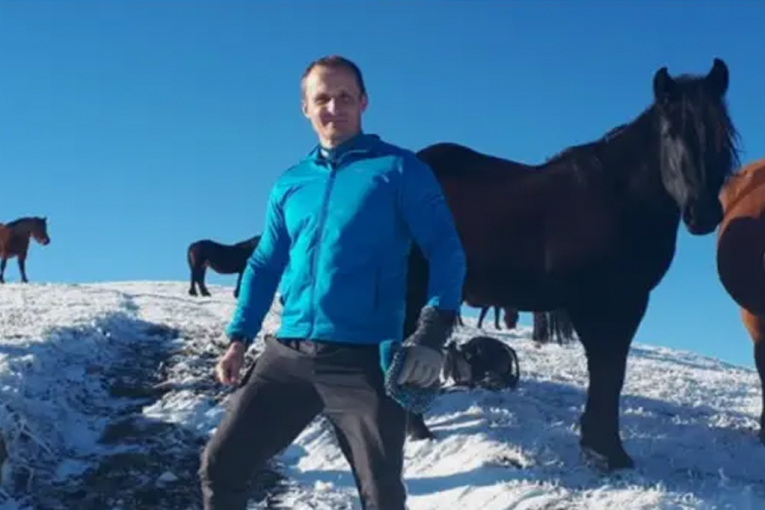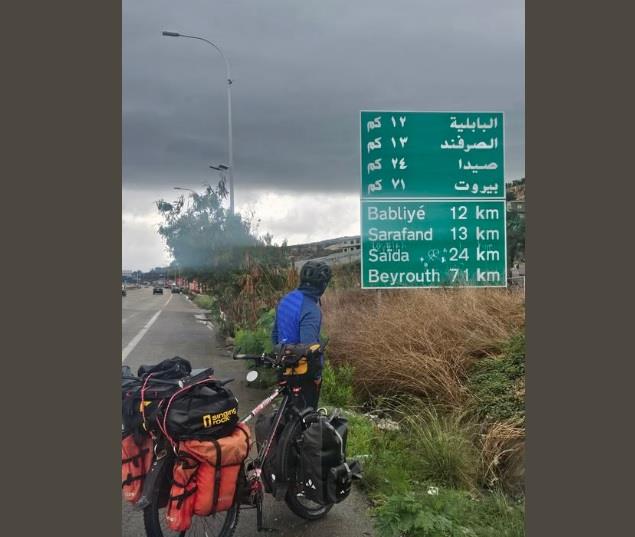


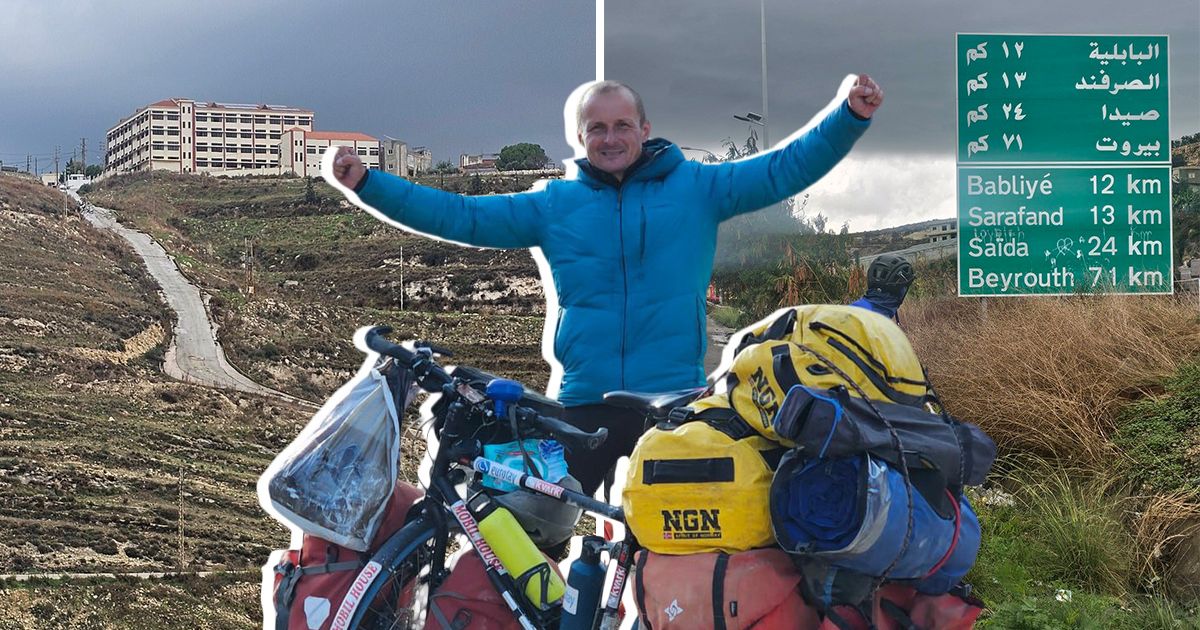
Extreme athlete and long-distance cyclist Dragan Šibalić from Kraljevo describes being detained by armed Hezbollah members in southern Lebanon on December 11, 2025, while cycling toward Beirut. Pro-government outlets agree that the incident took place in a tense, war-affected zone roughly 80–85 kilometers from the capital, that he was surrounded by multiple vehicles, and that the encounter was sudden and frightening, with Šibalić reporting a racing heartbeat, a sense of shock, and the impression of cold, scrutinizing faces as they questioned him.
Coverage converges on the portrayal of Šibalić as an experienced adventurer undertaking a high-risk route through an active conflict area, documenting his journey with photos of Hezbollah flags, wartime billboards, and devastated landscapes. It is also commonly noted that he later shared his story publicly, including via social media, emphasizing both the personal psychological impact of the detention and the broader dangers faced by civilians and travelers in zones where armed groups exercise de facto control.
Points of Contention
Framing of Hezbollah and security environment. Opposition-aligned outlets are likely to present Hezbollah primarily as a coercive, quasi-militia force whose control of territory makes civilian travel inherently unsafe and arbitrary, framing the detention as symptomatic of lawlessness. Pro-government outlets instead tend to depict Hezbollah as a heavily armed actor embedded in a broader war context, stressing the volatility of the front-line environment rather than deliberate abuse. While opposition coverage would highlight the menacing symbolism of cold stares and roadblocks as evidence of an oppressive order, pro-government coverage emphasizes that Šibalić intentionally entered a zone known to be under control of an armed group engaged in conflict.
Responsibility and risk-taking. Opposition sources are inclined to stress that, regardless of Šibalić’s personal choices, no traveler should be exposed to such detention, casting him mainly as a victim of armed actors’ unaccountable power. Pro-government outlets, by contrast, underline his role as an extreme adventurer who knowingly rode into a war zone, suggesting the incident is a foreseeable consequence of voluntary risk-taking. Opposition narratives would downplay personal responsibility in favor of critiquing the actors holding de facto power on the ground, while pro-government reporting uses his experience to caution against private travel in conflict areas without coordination or official support.
Political and regional implications. Opposition-aligned coverage is likely to use the story to question regional security arrangements and the influence of armed non-state actors, implying that such incidents show the weakness of formal state structures and the dangers of aligning with groups like Hezbollah. Pro-government coverage avoids turning the case into a broader geopolitical indictment, treating it instead as an individual, almost adventure-travel anecdote that illustrates the realities of conflict zones without assigning strategic blame. Where opposition narratives would connect the episode to criticisms of foreign policy and security partnerships, pro-government outlets keep the focus on personal experience and the dramatic human-interest angle.
Use of emotion and dramatization. Opposition outlets would be prone to dramatize the fear, psychological trauma, and perceived arbitrariness of the detention to underline the brutality and unpredictability of armed groups. Pro-government coverage, while using vivid language about racing hearts and shock, still anchors the story in an almost cinematic, adventure-story frame that normalizes fear as part of extreme travel. Opposition narratives may lean on emotional testimony to reinforce their broader critique of militia rule, whereas pro-government pieces fuse emotion with admiration for Šibalić’s endurance, thereby softening any implicit criticism of actors on the ground.
In summary, opposition coverage tends to elevate the incident into a critique of Hezbollah’s power and the broader insecurity created by armed non-state actors, while pro-government coverage tends to treat it as a dramatic but essentially personal adventure in a dangerous region, emphasizing individual risk-taking over systemic blame.