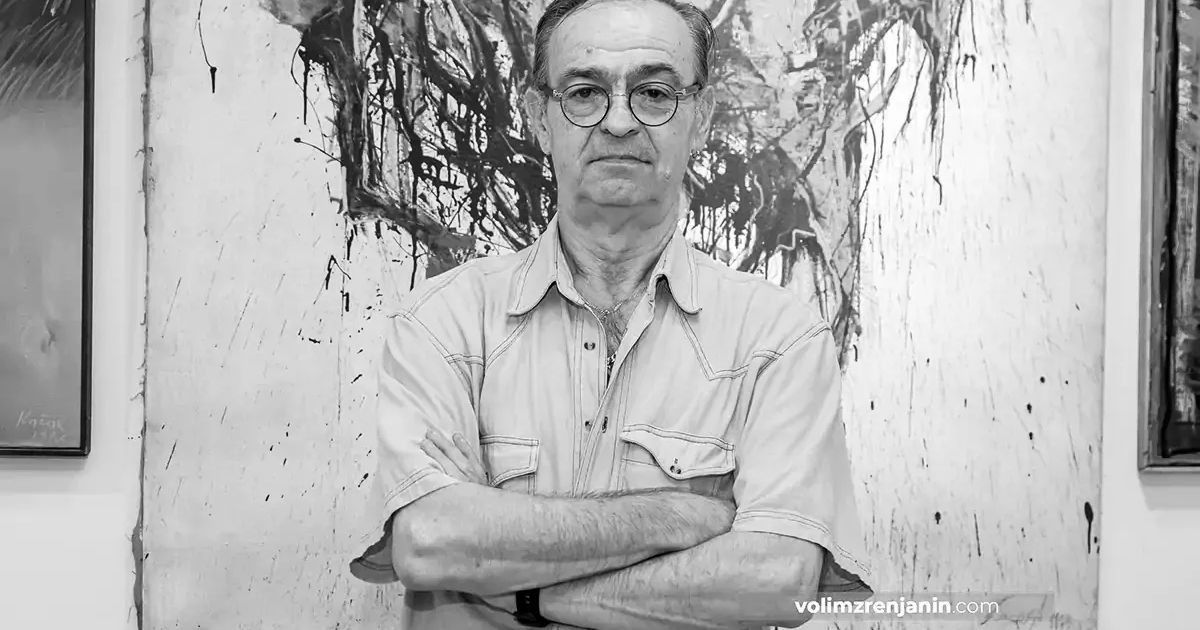


Academic painter Aleksandar Kačar has been reported dead in Zrenjanin, with both opposition and pro-government-leaning cultural commentators agreeing on the basic biographical frame: he was born in 1956, studied painting at the Academy of Fine Arts in Novi Sad, and graduated in 1985. Coverage converges on his status as a notable Serbian painter, his long exhibition record at home and abroad, participation in solo and group exhibitions as well as art colonies, and the fact that he lived and worked in his hometown of Zrenjanin, to which he remained strongly attached.
Across the spectrum, outlets and art-world voices characterize Kačar as an academically trained, highly respected painter whose work formed an important part of Zrenjanin’s and Serbia’s cultural life. They emphasize his early recognition and awards during his studies, his distinctive artistic expression, and the enduring legacy of his oeuvre for local institutions, galleries, and future generations of artists, treating his death primarily as a loss for the broader cultural community rather than a political event.
Points of Contention
Framing of significance. Opposition-aligned commentary tends to situate Kačar within a wider narrative of underappreciated cultural figures in Serbia, stressing that his national and international relevance was greater than official recognition suggests, while still acknowledging his strong local impact in Zrenjanin. Pro-government outlets foreground his importance as a pillar of the city’s cultural life and a respected academic painter, highlighting the breadth of his exhibitions and presenting him as a success story within existing cultural structures.
Role of institutions. Opposition voices are more likely to imply that cultural institutions and state support did not fully match the value of Kačar’s work, using his career to hint at chronic underfunding and marginalization of serious art. Pro-government sources, by contrast, tend to underscore his links with formal institutions such as the Academy of Fine Arts in Novi Sad and local cultural centers, framing these as environments that nurtured his talent and allowed his legacy to flourish.
Context of cultural policy. In opposition-leaning coverage, Kačar’s death is sometimes placed in a broader context of what they describe as a difficult environment for artists, with reference to systemic issues like precarious funding, limited promotion, and a lack of long-term cultural strategy. Pro-government outlets usually keep the focus on his biography and achievements, largely avoiding explicit critiques of cultural policy and instead presenting his career as evidence that dedicated artists can build substantial legacies under current conditions.
Tone and political distance. Opposition commentary, where it appears, often adopts a more subdued, reflective tone, emphasizing personal memories from colleagues and suggesting that figures like Kačar rarely receive sustained media or institutional attention until they die. Pro-government media use a more ceremonious tone, with formal obituaries that stress his titles, honors, and contributions to the local community, and they generally refrain from politicizing his passing or linking it to broader societal grievances.
In summary, opposition coverage tends to use Kačar’s death to gently question how the state and society treat serious artists and to highlight gaps between artistic value and institutional recognition, while pro-government coverage tends to present him as a celebrated cultural figure whose career illustrates the strength of local institutions and the enduring vitality of Serbia’s artistic life.