‘Cut Off One Head, Another Grows’: How Iran’s Rulers Built a System That Keeps Them in Power
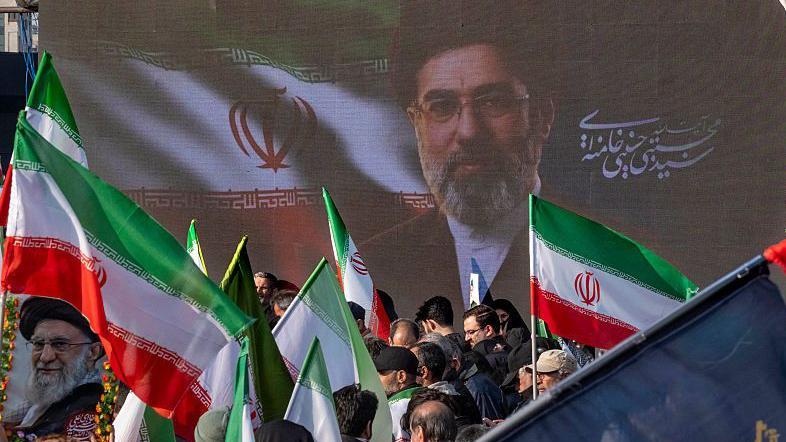
More than four decades after the 1979 Islamic Revolution brought Iran’s rulers to power, they are now facing their toughest moment.
TL;DR
- Iran's regime has developed a resilient power structure designed to survive crises, unlike leaders in countries like Tunisia, Egypt, and Syria.
- The system is described as a 'poly-dictatorship,' a blend of political Islam followers and Iranian nationalists, with power distributed among religious bodies, armed forces, and economic sectors.
- The Islamic Revolutionary Guard Corps (IRGC) is a key pillar, wielding significant military, political, and economic power, with a strong emphasis on ideology and martyrdom.
- Elite cohesion is maintained through patronage networks, where state organizations and the IRGC's business empire distribute jobs and contracts to loyalists.
- The regime's survival is also aided by a divided opposition, ideological indoctrination through religious and educational institutions, and a sophisticated surveillance system.
- While mass mobilization has occurred, the lack of elite division and security force defections has historically prevented regime collapse.
- The death of Supreme Leader Ayatollah Ali Khamenei is seen as a significant blow, with his successor expected to have less authority, though the regime's end is not considered imminent.