history
The Monastery Hides Buried Treasure: Here Children Are Baptized in Icy Water, Many Come Because of One Legend
However, there is no official data on when the original Monastery of Lešje, near Paraćin, was built, nor who built it. There are only indications that Serbian Prince Lazar may have built a small church at this site during the 14th century. It is also believed that before him, Grand župan Stefan Nemanja built a smaller church at this site in the second half of the 12th century, on the foundations of a church that existed there earlier. However, all these are unproven claims for now.
TL;DR
- The Monastery of Lešje, near Paraćin, is first mentioned in a 1536 Ottoman census but disappears by 1570.
- The exact construction date and founder are unconfirmed, with theories pointing to Prince Lazar or Stefan Nemanja.
- The monastery's treasury holds relics including a particle of the True Cross and relics of the 40 Holy Martyrs of Sebaste.
- The relics of Saint Prince Lazar are incorporated into the altar table of the Church of the Intercession of the Most Holy Mother of God.
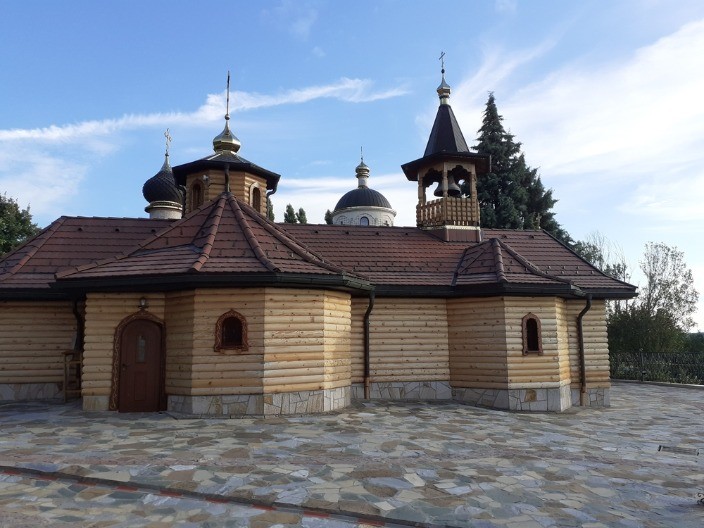
- The monastery complex includes the church, a bell tower, a memorial ossuary, a refectory, and guest quarters.
- Two nearby springs with believed healing properties have stone fountains and cascade pools.
- The architecture is a unique mix of the Moravian, Byzantine, and Greek styles.
- The main church has a trefoil (trikonhos) foundation, with a narthex added during a recent renovation.
- The original church was built using sige or bigar stone with walls approximately 80 cm thick.
- Frescoes are not yet present in the monastery as construction is ongoing.
- Strict adherence to the Jerusalem Typikon, established by Saint Sava the Sanctified, governs services and behavior.
- A local legend of buried treasure near the monastery has led to damage of the site.
- A illuminated cross is situated on Hajdučka cliff above the monastery.
- Children's baptisms involve full immersion in 12-degree Celsius spring water.
- A memorial commemorates the discovery of relics and a 12th-century necropolis.
- A local tradition holds that Turkish conquerors killed priests and believers at the site in the 16th century, whose bones were reportedly fragrant.