economy
February 19, 2026
How realistic is the demand for a ban on milk and other agricultural product imports?
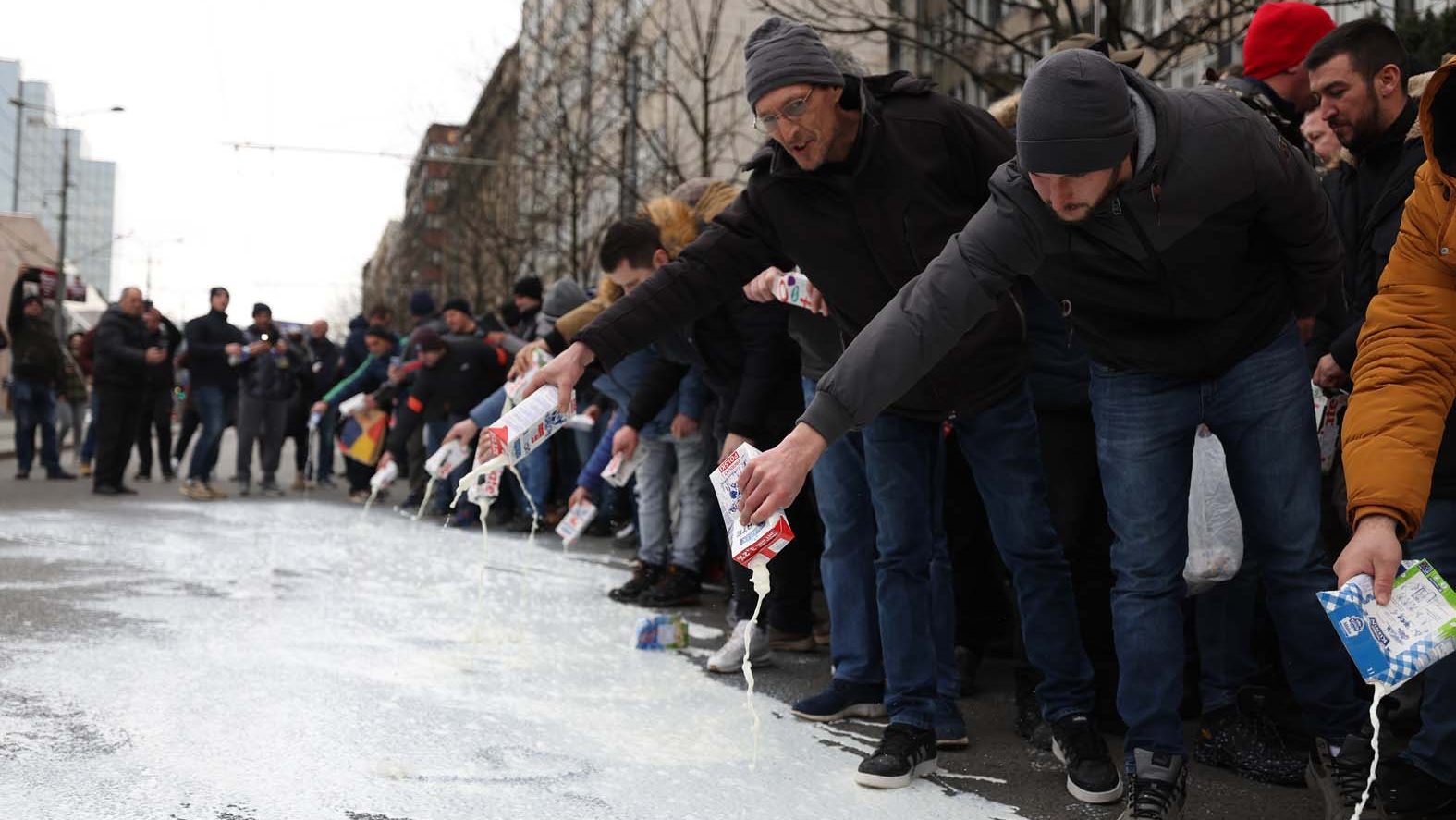
Hundreds of tractors on the streets and tons of spilled milk have illuminated the depth of the crisis in Serbian agriculture. However, there seems to be no quick and easy solution for milk producers. An import ban, while temporarily balancing the domestic market, could backfire on Serbia, as we depend on them more than they depend on us.
TL;DR
- Serbian farmers are protesting, blocking roads with tractors due to low milk prices and uncontrolled imports.
- A meeting with the Minister of Agriculture, Dragan Glamočić, ended without concrete solutions, with farmers claiming provocation.
- An import ban is considered unrealistic by the minister and experts due to Serbia's obligations under the EU's Stabilization and Association Agreement (SAA) and WTO rules.
- Experts suggest that Serbia faces systemic problems in milk production, including high costs and fragmented farms, requiring a strategic approach.
- While Serbia has a trade deficit in milk and cream, it has a surplus in overall dairy products and food trade.
- Experts emphasize that Serbia is more dependent on the EU market than vice versa, making retaliatory measures risky.
Continue reading the original article